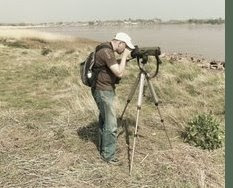
One thing's for sure - when I spotted my first bird of 2008, a Robin in my garden at 7:54am, I couldn't have imagined that I would end up with so many birds on the year list and so many new species under my belt.
I set out this year with the aim of focusing on quality, not quantity, but once I came back from Scotland in May with 199 birds, it seemed reasonable to try to keep the momentum going and post a good total for the year. I definitely aim to try to beat this total at some point in the future, but not next year, as I'll explain later.
Anyway, here's how the year panned out:
January, February & March
The first month of the year saw me add 76 species to the year list, but no lifers were to be had. My Dad and I had a full and enjoyable day at Upton Warren on 5 January, where we lucky enough to see Jack Snipe, Bittern and Little Egret. A visit to Draycote Water a couple of weeks later meant we were able to add Lesser Scaup to the year list, along with Smew and Great Northern Diver. The remainder of the month's ticks were pretty standard fair.
The Firecrests at Alvecote Pools ensured the first life tick of the year in February, and what beauties they were. The Mealy Redpoll at Upton Warren a little over a week later was also another nice one to clap eyes on.
Later in the month, I went to Devon with my Dad, Dave Lyons and Dave Thomas. We had an unbelievable amount of good fortune here and I bagged seven more lifers in the process, most notable being the Long-Billed Dowitcher that brought both mine and my Dad's life lists up to the 200 mark. Managing to see five species of grebe during our stay was also a highlight, as was what might well be my earliest Swallow for many years to come. Many thanks to Dave Thomas for putting us up for a couple of nights.
In March I unpicked my first bogey bird of the year, when I spotted Mandarins in the Wyre Forest. Later that morning, I had a Lesser Spotted Woodpecker there too. I paid several visits to the Wyre during the year and it has firmly established itself as a favourite place of mine. I will definitely be back in 2009, although I suspect I might be paying as much attention to the butterflies as the birds this time!
The Black Redstart at Grimley almost eluded us on 23 March, but we heaved a sigh of relief when we bagged it at the eleventh hour. The Scandinavian Rock Pipit was also there that morning. I don't tick subspecies, but even so, what a great little bird to see.
On 30 March we spent a day in the Forest of Dean and added Goshawk to the life list, though I hope to get better views at some point in the future. Later that day we visited Frampton On Severn and had an unexpected double in the shape of Garganey and Green-Winged Teal, the latter being another lifer.
The tally had reached 140 as the month drew to a close.
April, May & June
On 4 April I had a day to myself and set out on what was to be one of the greatest birding days of the year. After returning to the Forest of Dean to see Hawfinch, I had a go for my second Great Grey Shrike of the year and was treated to crippling views. My favourite bird of the year? Quite possibly. Two more Lesser Spotted Woodpeckers were seen later that day when I popped into Bittell Reservoirs on the way home. Magic!
Another bogey was unpicked when some fine gen from Pete Walkden got me my first ever Little Owl. Two days later, I was on holiday in East Anglia where another four lifers fell, including Bearded Tit and Nightingale, although my glimpse of the latter was brief in the extreme! Solid year ticks in the shape of Woodcock, Woodlark, Tree Pipit and Twite were also on offer, leaving the total for the year at an impressive 177 at the end of the month.
On a negative note, Grasshopper Warbler was heard at Holkham, but not seen - the first of several elusive birds this year. Also, we dipped on Golden Pheasant at Wolferton, despite hearing them call.
My first ever Yellow Wagtail at Draycote Water was another memorable and beautiful bird. Also at the end of the month I had a great morning's birding, life-ticking Little Gull at Upton Warren and adding Lesser Whitethroat to the year list, before a quick visit to Shenstone resulted in the first of many Cuckoos that I saw this year.
May saw me visit the Wyre Forest again with Max, Kay, Dave Lyons and my Dad. We had a good morning despite a couple of soakings. Kay life-ticked Wood Warbler and we also saw Lesser Spotted Woodpecker, Redstart and Tree Pipit.
After a couple of failed attempts, I finally bagged Black Tern for the year at Upton Warren. Another elusive Grasshopper Warbler was heard that morning too.
Next up was the great big Scotland trip and a week's worth of intensive birding. We knew there would be lifers, we knew there would be year ticks, but I still get emotional when I think about the quality of some of the birding we did up there. Seeing Velvet Scoters at Gullane Bay sticks in the mind, as does the Long-Tailed Duck at Gosford later the same day. Just when we thought things couldn't get any better, we stumbled upon Temminck's Stint at Musselburgh.
One of the funniest moments of the year was when a Spotted Flycatcher popped up whilst we were enjoying drinks on the balcony at our hotel one evening. Birding at its best!
Other memorable spots during our stay were Hen Harrier, Hooded Crow, Black Grouse and Black-Throated Diver. Seeing Ptarmigan up on Lochnagar was also a special moment, probably my second favourite spot of the year, all things considered.
I ticked Scottish Crossbill too, but there is always that sense of lingering doubt as to whether it was or it wasn't. I am happy to keep it on the list based upon what I saw, although I appreciate that identification is difficult without analysing calls.
Either way, the year list took in 199 species once we had returned.
Apart from the birds, it was great to see Red Squirrels and Arctic Hares during our visit.
Onto June, where a Turtle Dove at Throckmorton became the 200th tick of the year. A great milestone and a super bird to see relatively close to home.
Whinchat, Chough, Puffin and Black Guillemot were all nice ticks in Wales, but the highlight of the month was seeing the Nightjars on Cannock Chase. Thanks to Richard and his friends, Pete, Kay and Max for a memorable evening. We had another Woodcock that evening too, plus a few Cuckoos and a Hobby. A great night.
Halfway through the year and the list stood at an impressive 206 birds.
June also saw the birth of Worcestershire Source. Many thanks to everyone who contributed news to the site in 2008. Please continue to support us and help the site to grow. Thanks also to Kay who has done a fantastic job keeping the news flowing over the last six months.
July, August & September
A Great Skua on Criccieth beach was an unexpected bonus. It took some sorting out mind! My first experience of skuas of any kind. Hopefully I might get more in 2009.
A Tawny Owl spotted from my garden at the end of the month was equally surprising and equally as welcome. Another bogey bit the dust.
Two lifers in the shape of Red-Necked Phalarope and Yellow-Legged Gull ensured that the year list kept ticking over, although doubts were cast over the identity of the latter.
The highlight was perhaps seeing the Silver-Washed Fritillaries in the Wyre Forest in July. This kick-started my interest in butterflies and dragonflies, so in many ways may have been one of the most important moments of the year.
At the end of September, I was fortunate enough to see my very first Badger, during our holiday in Devon.
October, November & December
A few enjoyable twitches to Buckinghamshire resulted in two life ticks, Ferruginous Duck on 12 October, and Ring-Necked Duck on 26 October. Both were great little birds. The Shore Lark at Upton Warren was an unexpected year tick and a smashing bird for the Midlands, taking the total to 216.
A bona fide Yellow-Legged Gull at Stubber's Green in November was nice to see, meaning no more sleepless nights regarding the potentially dodgy tick earlier in the year!
There were still a few birds to be spotted as proven by the Whooper Swan, Purple Sandpiper and Merlin in Wales, but there was also disappointment when we failed to find Snow Buntings at Pensarn.
A fine Smew on 1 December at Bittell Reservoir was a good tick on a local patch. Five days later, we had a second stab at Caspian Gull at Stubber's Green. The debate continues to rage as to whether we saw a second-winter Caspian Gull or not. I have elected not to tick the species for the time being.
Then, just as it seemed the birding year had drawn to a close, there was the small matter of seeing my first Waxwing near Upton Warren. A fitting way to finish.
Final tally, 220 birds on the year list, including 38 lifers.
2009
So, onto my plans for the coming year. As I stated in an earlier entry, the focus is very much going to be on patch birding. At least once a month, I intend to walk the lanes of Wythall and the surrounding area compiling a list of all the species I can see. I've set myself a target of 75 species, but bear in mind this will take in at least a couple of excursions to Earlswood Lakes. Basically, if I'm birding on foot and I see something, it will make the list.
Aside from this change of direction, I have some other personal goals that I would like to achieve. They are:
To find a Pied Flycatcher in the Wyre Forest.
To photograph Silver-Washed Fritillaries in the Wyre Forest.
To see a Corn Crake in Islay.
To see pure Rock Doves on Islay.
To photograph a Kingfisher to a reasonable standard.
To see Golden Oriole and Montagu's Harrier in Norfolk.
To add at least 5 butterfly species to my life list.
To photograph the Little Owl in Hopwood properly.
To photograph an adult drake Smew.
To walk my patch at least once a month.
To see Tree Sparrows at Shustoke Reservoir.
To see Nightingales at Paxton Pits.
No doubt at some point I will feel inspired to have a pop at my own record of 220 species in a year. I'm sure this could be easily beaten if I put my mind to it, but I will probably wait until I can get back to the highlands of Scotland before I do so. The birding up there is just in a different league.
Until then, the emphasis is firmly on quality, not quantity, and I am really keen to devote more time to butterflies and dragonflies next year.
Whatever your goals are, or even if you don't have any, have a great New Year and enjoy your birding. Because when all's said and done, that's what it's all about.
This is Reg The Birder logging off until 2009.
Sunday, December 28, 2008

Saturday, December 27, 2008
Waxing Lyrical
Just when I thought the binoculars had been hung up until the New Year, what should happen? A sizeable flock of Waxwings take up residence at Webb's garden centre, just a short hop down the M5 for yours truly.
I'd been optimistic about my chances of seeing this bird during the winter and was happy to wait until they paid a visit to one of my local patches before dashing off to see them.
As it happens, I didn't have the fortune to see the flock of 20 birds or so that has been present for a couple of days, but whether you see one bird or one thousand, you still only get one tick for your list, so I was happy to have the pleasure of watching a single Waxwing feeding on the berries at the entrance to Webb's for half an hour or so this morning [lifer 231!] [year tick 220!].
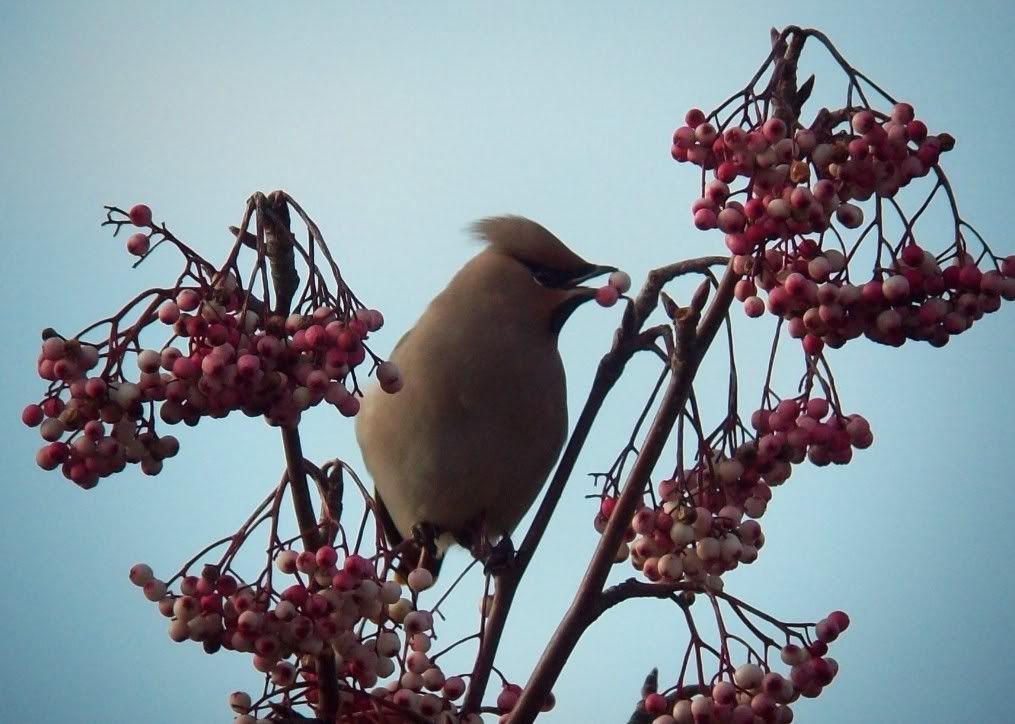
Waxwings are such beautiful birds that even Mrs Reg was happy to tag along. Also present were my Mum and Dad, and birding friends Cat and Chippy. Fellow Bird Forum regulars Pam, Emma and Matt were also there and it was nice to meet them for the first time. Special thanks to Pam for allowing me to take the above picture through her scope. It was your scope, wasn't it Pam?
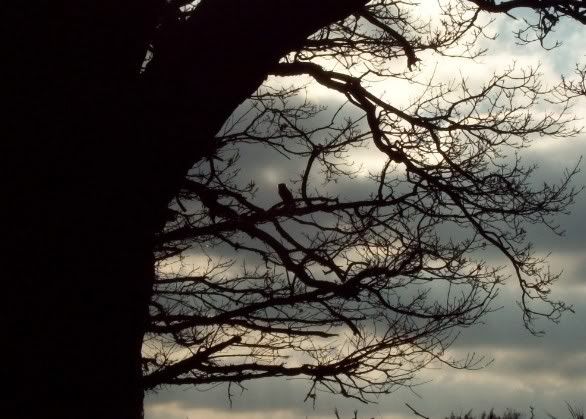
I took the scenic route back home, mainly to avoid the heavy traffic in and around Bromsgrove. This meant passing the home of the Little Owl that I like to see when I can. My luck was in today. See if you can spot him in the following picture:
So, the binoculars have been hung up once more. I really can't see myself doing any more birding now until 1 January 2009, so I've got a whole four days off before another year list begins!
Before that, however, there's the small matter of my review of the birding year, which will be published in the next few days.
I'd been optimistic about my chances of seeing this bird during the winter and was happy to wait until they paid a visit to one of my local patches before dashing off to see them.
As it happens, I didn't have the fortune to see the flock of 20 birds or so that has been present for a couple of days, but whether you see one bird or one thousand, you still only get one tick for your list, so I was happy to have the pleasure of watching a single Waxwing feeding on the berries at the entrance to Webb's for half an hour or so this morning [lifer 231!] [year tick 220!].
Waxwings are such beautiful birds that even Mrs Reg was happy to tag along. Also present were my Mum and Dad, and birding friends Cat and Chippy. Fellow Bird Forum regulars Pam, Emma and Matt were also there and it was nice to meet them for the first time. Special thanks to Pam for allowing me to take the above picture through her scope. It was your scope, wasn't it Pam?
I took the scenic route back home, mainly to avoid the heavy traffic in and around Bromsgrove. This meant passing the home of the Little Owl that I like to see when I can. My luck was in today. See if you can spot him in the following picture:
So, the binoculars have been hung up once more. I really can't see myself doing any more birding now until 1 January 2009, so I've got a whole four days off before another year list begins!
Before that, however, there's the small matter of my review of the birding year, which will be published in the next few days.
Monday, December 15, 2008
To Be Or Not To Be ...
That is the question. Whether 'tis nobler in the mind to suffer the Lapwings and Sparrows of outrageous fortune, or to stand in the freezing cold on a Saturday afternoon at Stubber's Green trying to sort out a Caspian Gull, with only a flask of coffee and a scotch egg to keep you going.
If Shakespeare had been a birder, perhaps this is how Hamlet's soliloquy would have turned out?
Anyway, as promised, I made the return journey to Stubber's Green this weekend with my father, and Kay and Max to see if we could strike gull gold and locate the Caspian Gull that had eluded us at the beginning of November.
For Kay's take on events, please pay a visit to her blog.
Despite the rain and the freezing cold, we managed to stick it out from about 10:45am until about 1:15pm, but failed to spot anything other than the normal Black-Headed Gulls, Common Gulls, Herring Gulls, Lesser Black-Backed Gulls and Great Black-Backed Gulls. Although Common Gulls are not always easy to spot in the Midlands, these are essentially your classic five gulls that you expect to see without having to put too much effort in.
Other birds present were Lapwing, Pied Wagtail, Little Grebe, Canada Goose, Mallard, Tufted Duck and Starling. Again, all par for the course. A Red-Breasted Merganser was around early on, but had flown by the time Kay and Max joined us. Also, four Goosander flew overhead during the morning.
That was about as good as it got, until just as we were turning our thoughts to leaving, Kay spotted a dark-eyed, clean-headed gull on the water's edge. On closer inspection we agreed that it showed enough features of a Caspian Gull to be worth photographing and I reeled off a few record shots before the bird took off and headed north, possibly to nearby Chasewater.
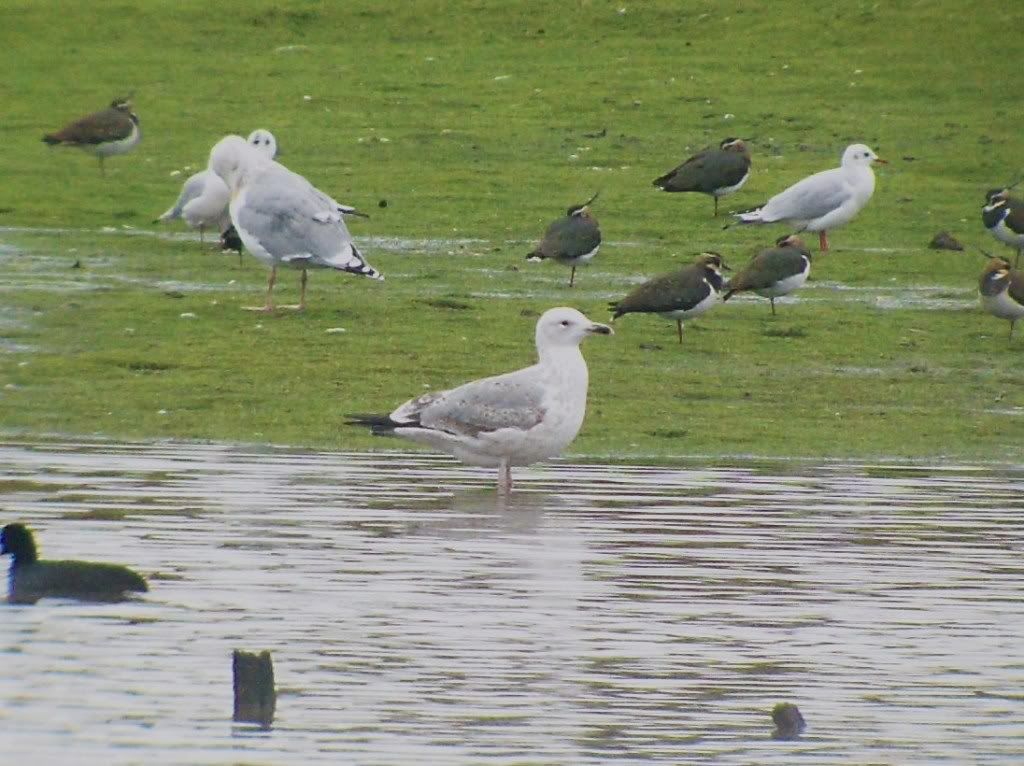
We were optimistic that we might have found our target bird, although we felt this was a second-winter individual and we were aware that the Caspian Gulls seen at Stubber's Green recently were older birds. For those that are interested, there has been some lively debate around the bird's identification here.
The general consensus seems to suggest that it is not a Caspian Gull, but a Herring Gull. Definitely worth a shout, however, and credit to Kay for spotting the bird.
After Stubber's Green, Kay and Max were off to look for Waxwings in Codsall, but with feet like blocks of ice, I decided to head home instead.
And so my birding for 2008 is at an end. I had planned to include my review of the year in this blog entry, but I think I will hold that back now for a couple of weeks.
Therefore, can I take this opportunity to wish everyone a very merry Christmas. Have a good one, and don't eat too many mince pies!
If Shakespeare had been a birder, perhaps this is how Hamlet's soliloquy would have turned out?
Anyway, as promised, I made the return journey to Stubber's Green this weekend with my father, and Kay and Max to see if we could strike gull gold and locate the Caspian Gull that had eluded us at the beginning of November.
For Kay's take on events, please pay a visit to her blog.
Despite the rain and the freezing cold, we managed to stick it out from about 10:45am until about 1:15pm, but failed to spot anything other than the normal Black-Headed Gulls, Common Gulls, Herring Gulls, Lesser Black-Backed Gulls and Great Black-Backed Gulls. Although Common Gulls are not always easy to spot in the Midlands, these are essentially your classic five gulls that you expect to see without having to put too much effort in.
Other birds present were Lapwing, Pied Wagtail, Little Grebe, Canada Goose, Mallard, Tufted Duck and Starling. Again, all par for the course. A Red-Breasted Merganser was around early on, but had flown by the time Kay and Max joined us. Also, four Goosander flew overhead during the morning.
That was about as good as it got, until just as we were turning our thoughts to leaving, Kay spotted a dark-eyed, clean-headed gull on the water's edge. On closer inspection we agreed that it showed enough features of a Caspian Gull to be worth photographing and I reeled off a few record shots before the bird took off and headed north, possibly to nearby Chasewater.
We were optimistic that we might have found our target bird, although we felt this was a second-winter individual and we were aware that the Caspian Gulls seen at Stubber's Green recently were older birds. For those that are interested, there has been some lively debate around the bird's identification here.
The general consensus seems to suggest that it is not a Caspian Gull, but a Herring Gull. Definitely worth a shout, however, and credit to Kay for spotting the bird.
After Stubber's Green, Kay and Max were off to look for Waxwings in Codsall, but with feet like blocks of ice, I decided to head home instead.
And so my birding for 2008 is at an end. I had planned to include my review of the year in this blog entry, but I think I will hold that back now for a couple of weeks.
Therefore, can I take this opportunity to wish everyone a very merry Christmas. Have a good one, and don't eat too many mince pies!
Sunday, December 7, 2008
Have I Got Smews For You?
Just a quick blog entry to bring you up to date with events. On Monday I paid a visit to Bittell Reservoirs. I'd decided upon this location a few days earlier, but news of a Smew at Lower Bittell Reservoir on Sunday added a little spice to proceedings.
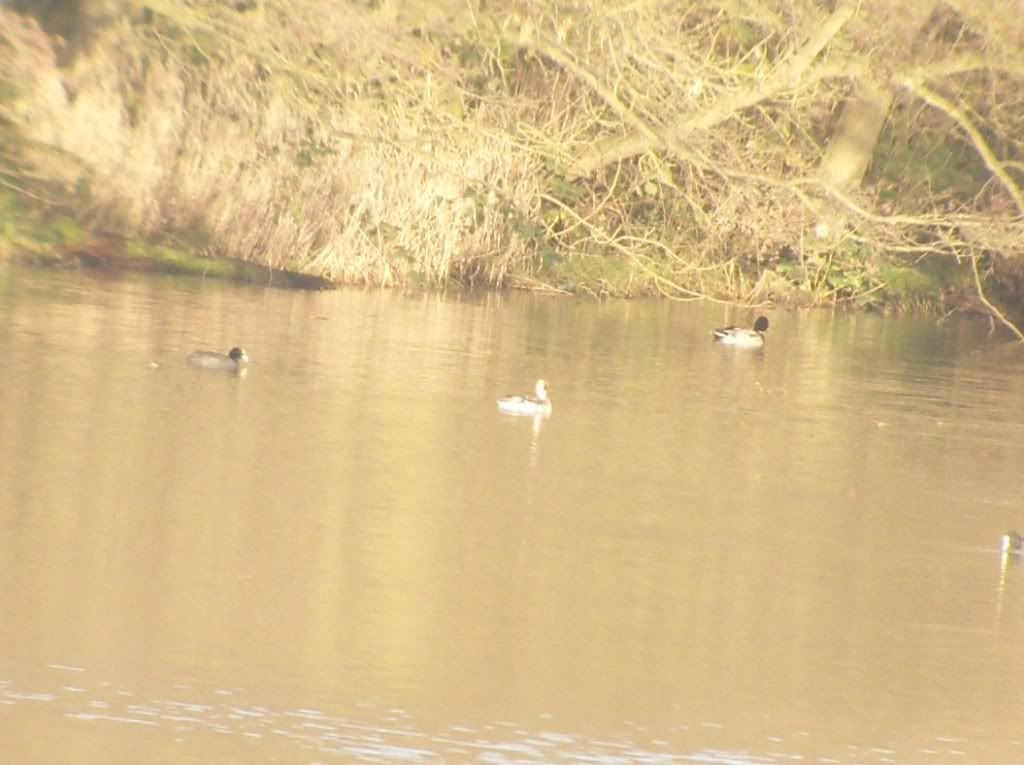
There is a good collection of wildfowl at the site now that winter is here. The first-winter drake Smew showed on Shrub Mill Pool after a short while, and there were good numbers of Goosander present, mainly drakes. I also noted a drake Pintail on the other side of the causeway, but I couldn't locate the Common Scoter that has been around for a week or so.
I managed to get a picture of the Smew. At best, it was disappointing. At worst, it was frickin' awful!
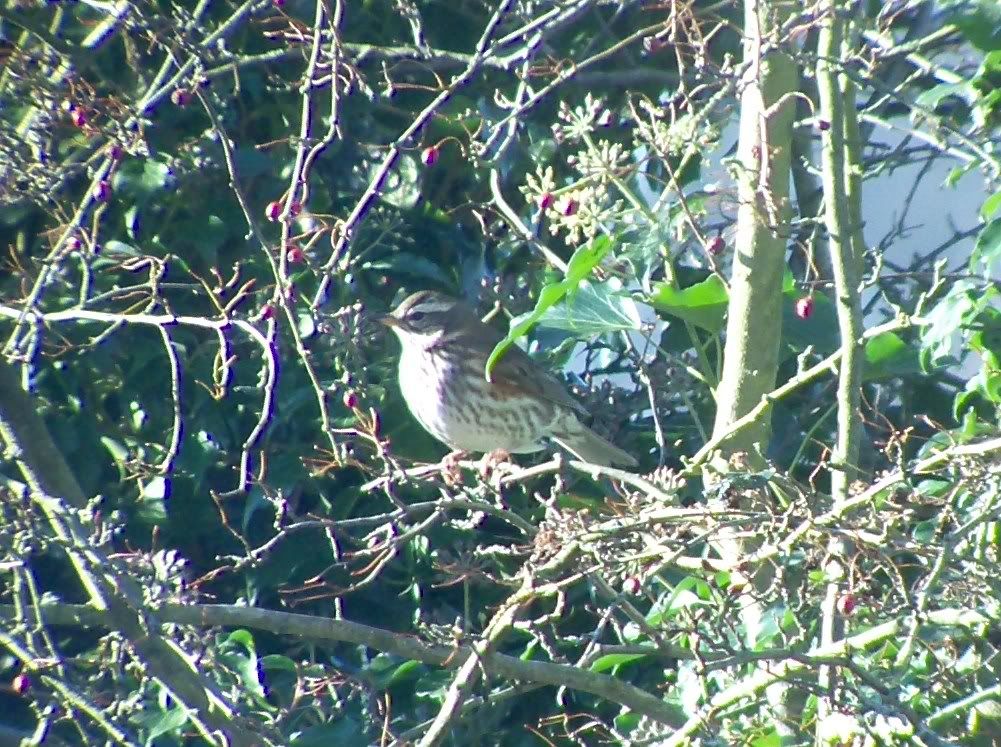
I took a walk up to the upper reservoir, but was disappointed by the fact that the path through the woods was extremely quiet. Things improved once I reached the end of the path, as there were good numbers of Redwing about, then I spotted a further five Pintails on the reservoir.
What I'd really been hoping for was to find my own Waxwing. A pair of these elusive winter visitors turned up in Stourbridge last week. Surely it's only a matter of time before more come our way? I don't really want to twitch them unless I have to. I'd much rather see them on a local patch if I can. Here's hoping.
Next Saturday, I'm off to Stubber's Green again to see if I can spot the Caspian Gull that evaded me a few weeks back. That, I think, is probably going to be my last birding excursion of 2008.
I'll report back on that in due course, at which time I think I will also be reviewing the birding year and declaring my goals and objectives for 2009.
Until then, happy birding!
There is a good collection of wildfowl at the site now that winter is here. The first-winter drake Smew showed on Shrub Mill Pool after a short while, and there were good numbers of Goosander present, mainly drakes. I also noted a drake Pintail on the other side of the causeway, but I couldn't locate the Common Scoter that has been around for a week or so.
I managed to get a picture of the Smew. At best, it was disappointing. At worst, it was frickin' awful!
I took a walk up to the upper reservoir, but was disappointed by the fact that the path through the woods was extremely quiet. Things improved once I reached the end of the path, as there were good numbers of Redwing about, then I spotted a further five Pintails on the reservoir.
What I'd really been hoping for was to find my own Waxwing. A pair of these elusive winter visitors turned up in Stourbridge last week. Surely it's only a matter of time before more come our way? I don't really want to twitch them unless I have to. I'd much rather see them on a local patch if I can. Here's hoping.
Next Saturday, I'm off to Stubber's Green again to see if I can spot the Caspian Gull that evaded me a few weeks back. That, I think, is probably going to be my last birding excursion of 2008.
I'll report back on that in due course, at which time I think I will also be reviewing the birding year and declaring my goals and objectives for 2009.
Until then, happy birding!
Saturday, November 29, 2008
Spellbound In Wales
Until last Saturday I could count the number of Woodcocks I had seen on one hand and still have two fingers left over. My first was at Titchwell in February 2007, where I had crippling views of one just off the path by the visitor centre. My second was also in Norfolk, in April this year, and my third was on Cannock Chase in June, when I went looking for Nightjars with Kay, Max, Pete and Richard 'The Producer' Powell.
I was back in Wales last weekend and although the main reason for the trip was to help my Dad with some work in the garden, there were, unsurprisingly, a few birding matters to take care of. First up, as daylight fell on Saturday we drove up to the Glasfryn Estate, whose Pheasants have found their way into my Dad's casserole pot on a number of occasions over the years. Earlier this year, my Dad found out that this is a prime spot to watch Woodcocks coming in to roost and it promised to be a spectacle not to be missed.
With the kind permission of the resident gamekeeper, we parked up as it was getting dusk and waited. Before too long our first Woodcock flew over. In a short space of time we counted about seven, but it quickly got too dark to see properly so we called it a night.
Sunday saw us completing most of the jobs in the garden, which meant that on Monday afternoon my Dad and I were able to get down to Porthmadog for a spot of seawatching. We positioned ourselves on the headland not too far from where I had my Great Skua sighting in July.
There was an enormous flock of Common Scoter on the sea. There must have been something better amongst them, but they were a tad distant to sort out easily and it was frightfully cold, so we weren't too keen to spend any longer than we had to exposed to the Welsh elements. We clocked a few Great-Crested Grebes and Red-Breasted Mergansers on the water, plus a Red-Throated Diver, then headed back to the car.
My Dad had seen Water Pipits off Porthmadog Cob in March and we were keen to see if we could find any. Sadly we were unsuccessful. A Little Egret, a Grey Heron, some Ravens and a few Redshank were the best we could manage. Finally, I bagged a guaranteed year tick when we popped down to Prenteg to see the Whooper Swans [year tick 217!] that arrive like clockwork each winter.
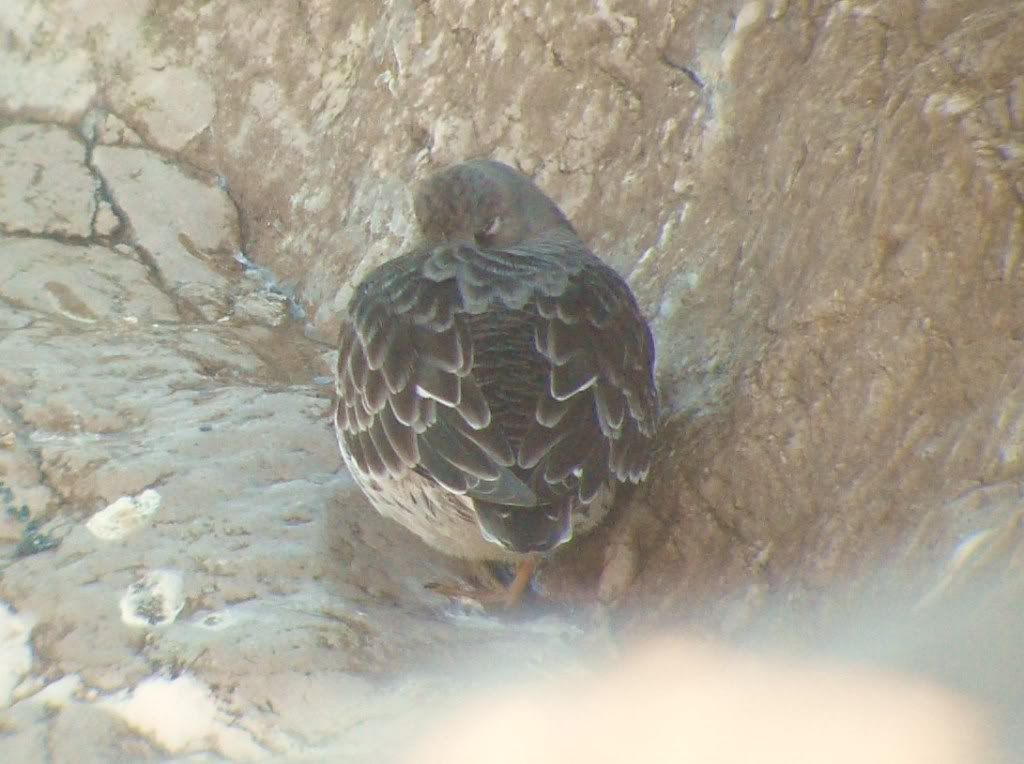
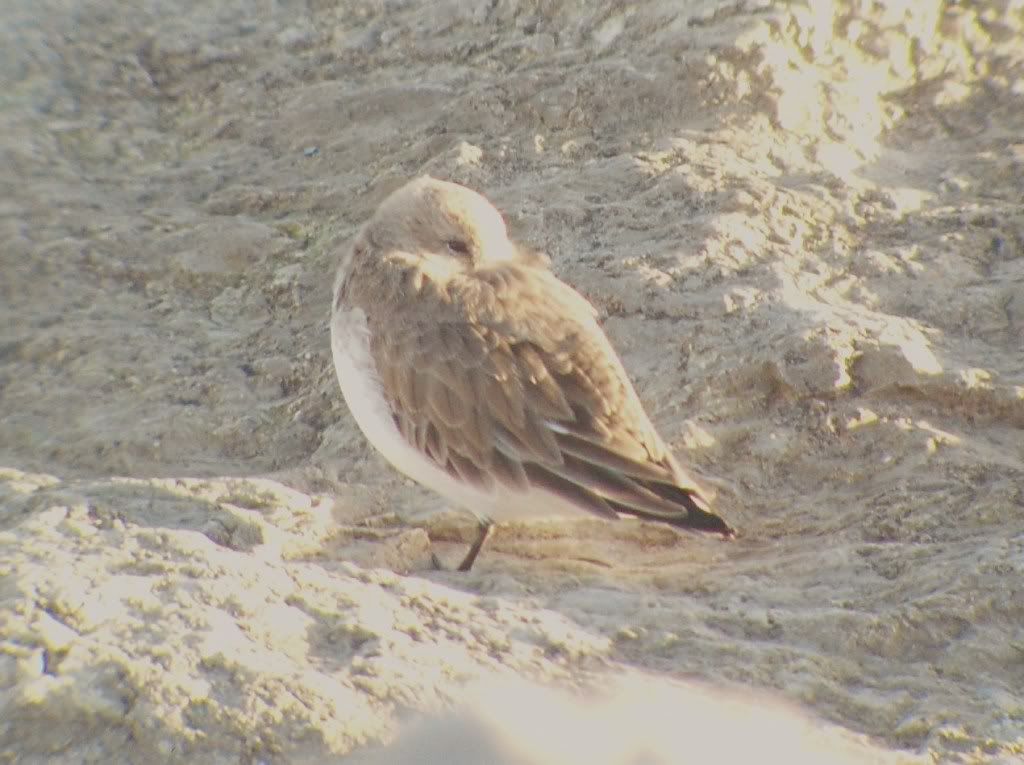
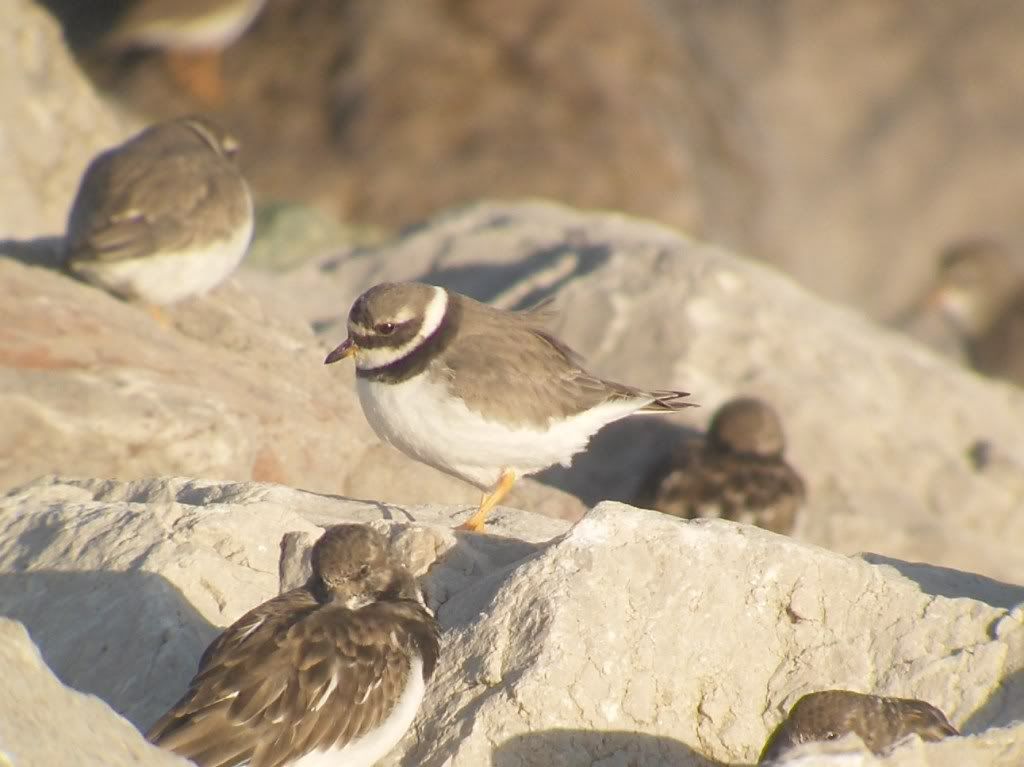
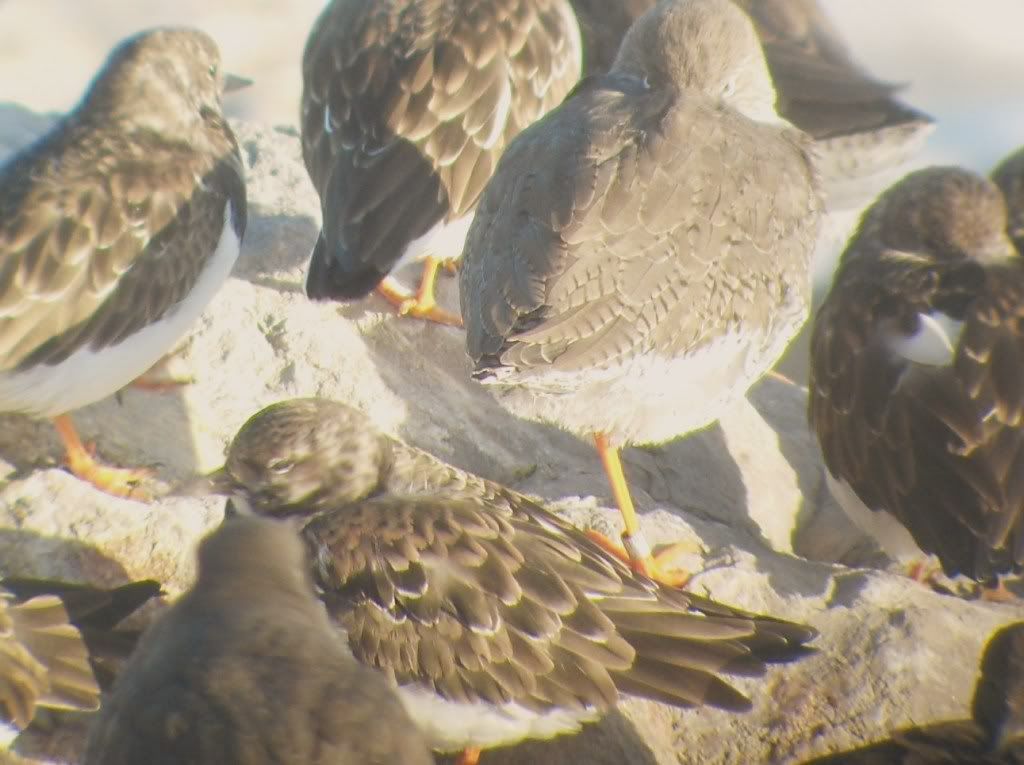
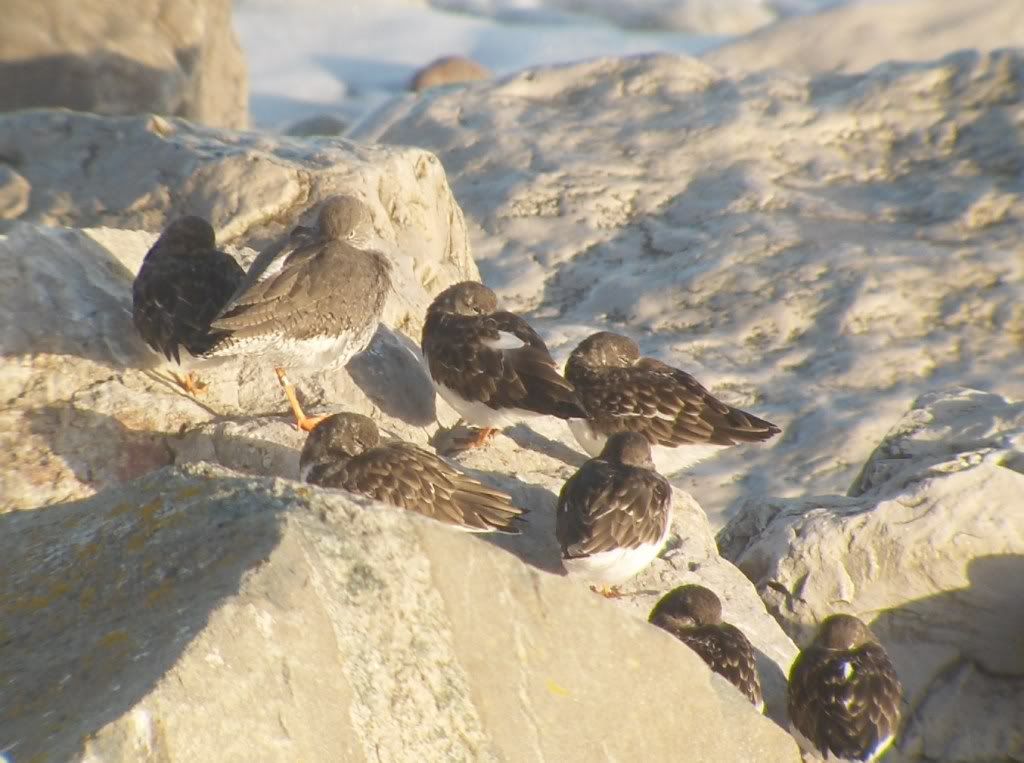
Tuesday had always been pencilled in as our birding day proper. A comprehensive itinerary had been prepared and shortly after 8:00am we were on our way to Rhos-On-Sea, quite simply one of the best places to see Purple Sandpiper at this time of year. These scarce waders didn't disappoint us - there they were, on the rocks with many Turnstones, Redshanks, Ringed Plovers and a few Dunlin [year tick 218!].
You can get really close to the birds at high tide here. So much so, that my attempts at digiscoping were hindered only by the fact that I needed to be further away from them! A few shots follow.
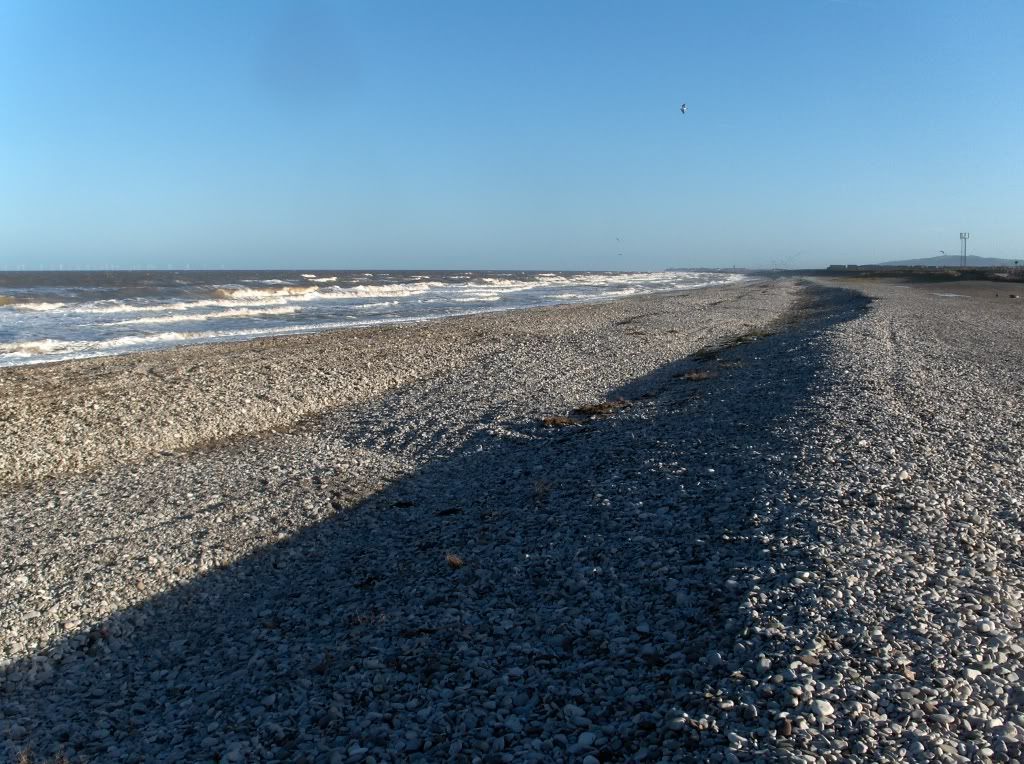
Next stop, Pensarn. This is reported to be a veritable mecca for Snow Bunting. Indeed, I thought it was another lifer in the bag, but maybe it's still just a bit too early for them to be around in any great numbers? We had a lengthy walk up and down Pensarn beach, but couldn't manage anything better than a Redshank or a Turnstone.
Aber Ogwen was our next port of call. We scanned the estuary and noted some nice birds, namely Goldeneye, Goosander and Little Egret, then found our way to the hide overlooking a small pool. Another Little Egret was poking around in the shallows and there were a good variety of common birds on the feeders. Shortly before we left, a Great Spotted Woodpecker and a Marsh Tit both showed up. The latter was a very pleasing day tick.
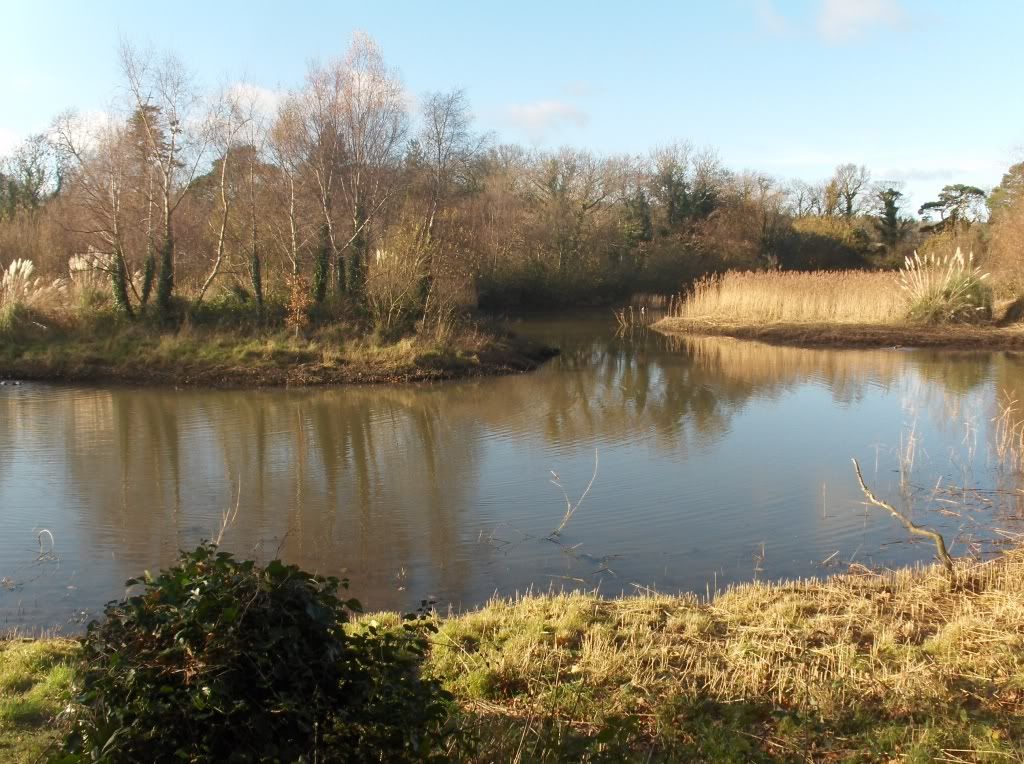
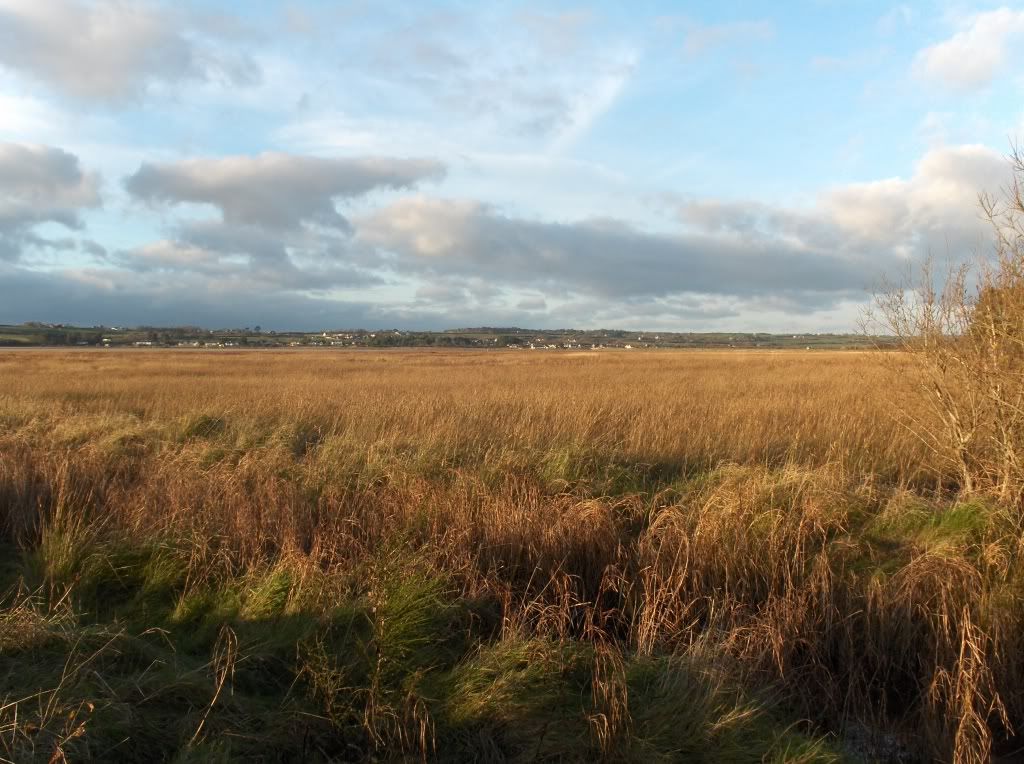
We spent the last few hours on Anglesey. Firstly, we checked out Llyn Coron. This is a lovely little spot. We didn't worry too much about the lake itself, concentrating on the wonderful habitat that borders the road. Scrubland and dunes to the left of us, and stubble fields to the right. Here we were able to tick Goldfinch and Chaffinch in good numbers, and Stonechat and Reed Bunting too. The relentless cronking of many Ravens served to remind us that we were on the outskirts of Newborough Warren.
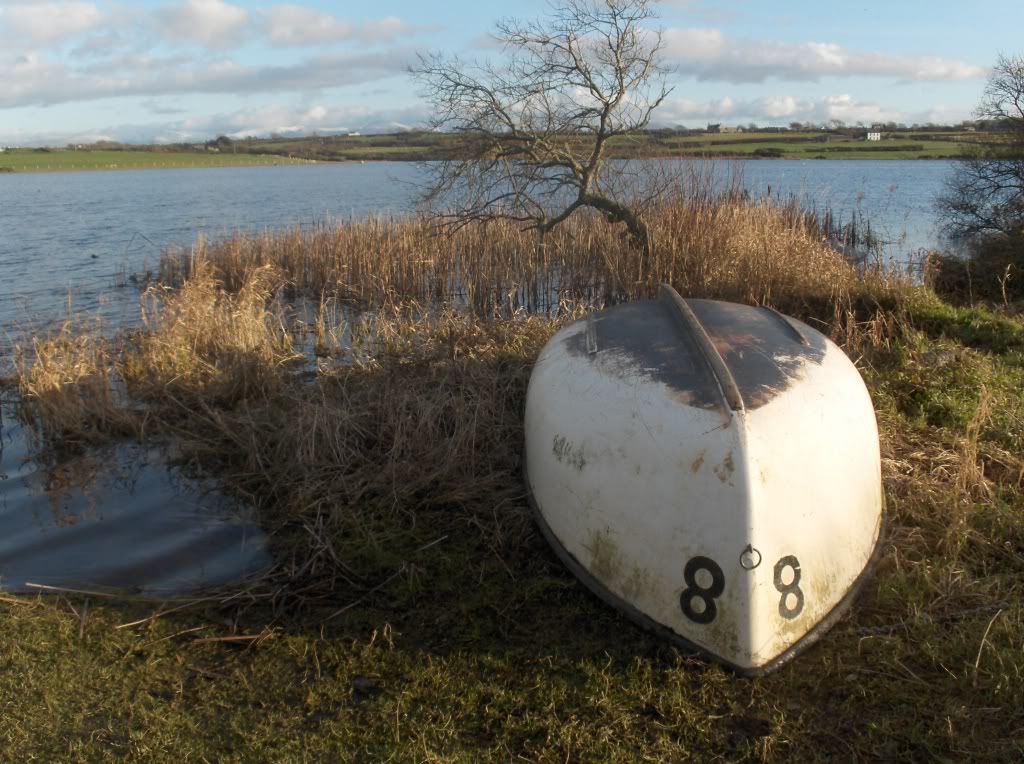
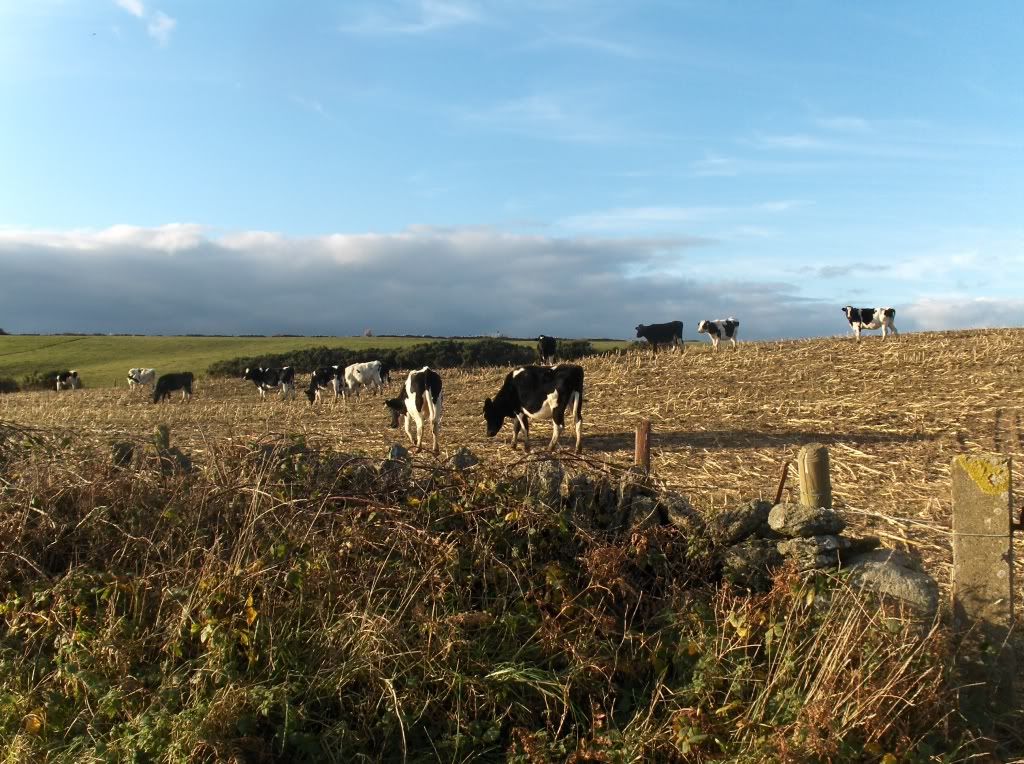
As the sun dropped in the sky, we relocated at Maltraeth. This is a prime spot to see raptors coming in to roost, and we were optimistic of bagging an owl or two, plus a Hen Harrier if we were lucky. We had not long found a decent place to view from when my Dad spotted something perched on a post out on the estuary. We both had a good look at it through the scopes and quickly identified it as a female or juvenile Merlin [lifer 230!] [year tick 219!]. Magical!
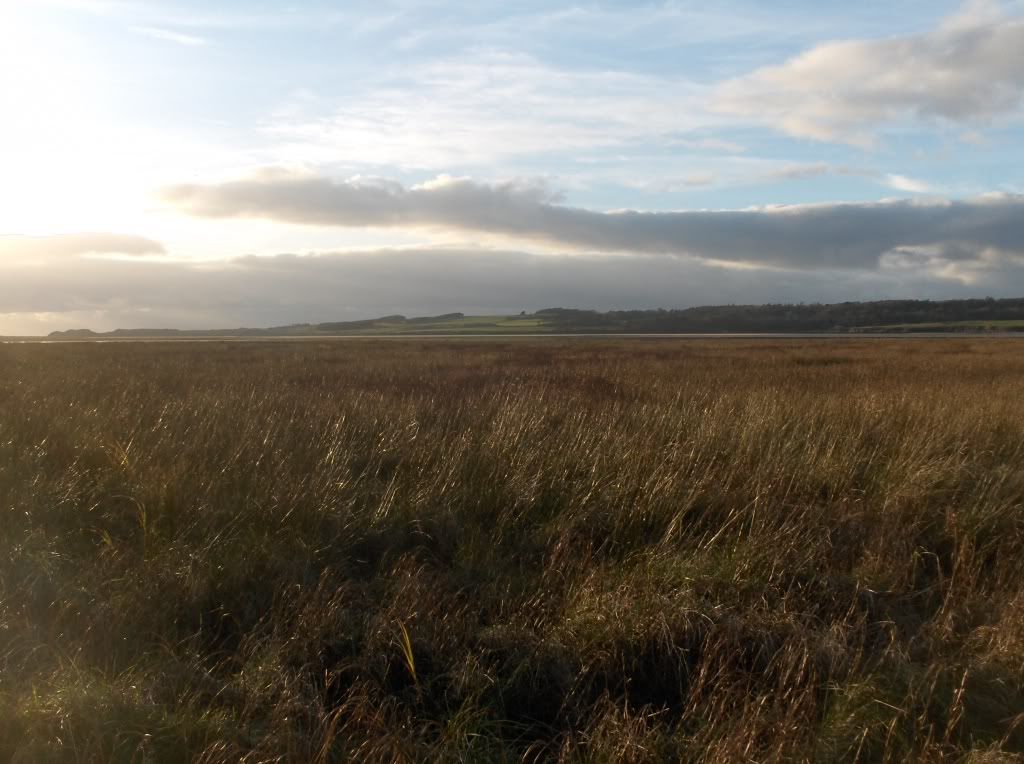
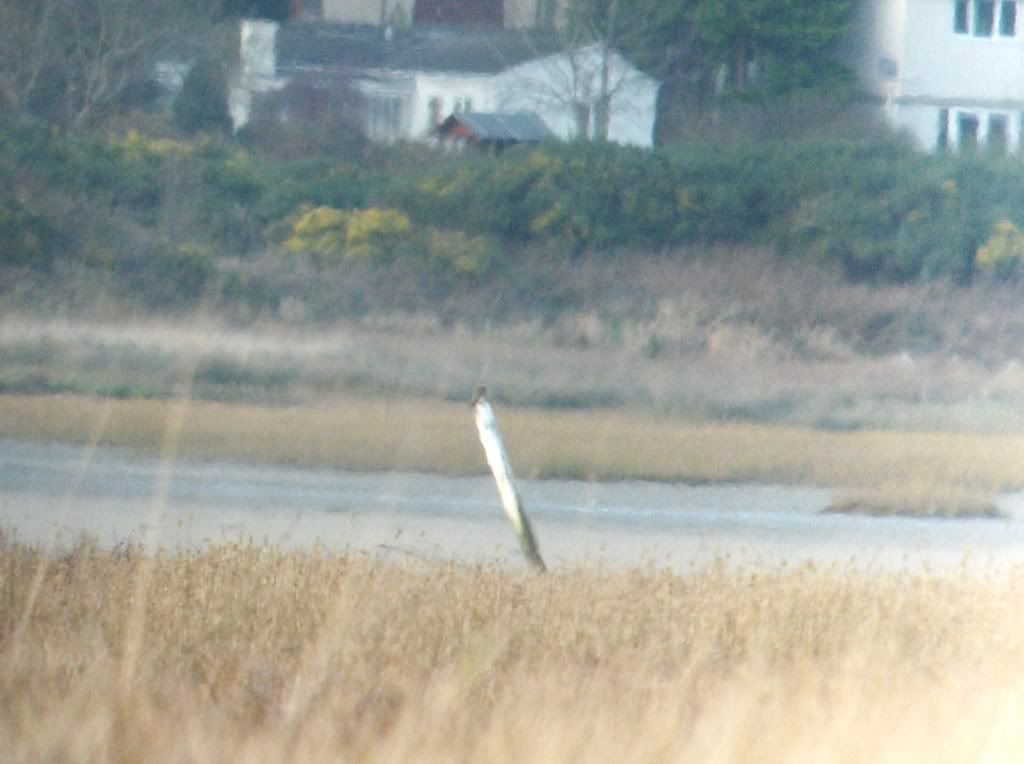
The Merlin was flushed by a Raven within a few minutes, but reappeared on another post a little bit later. This time, a Carrion Crow saw it off and stole its perch, but once again it returned and showed well for a few minutes. I'm glad we saw the Merlin. We hadn't had that much luck during the trip, but this made it all worthwhile.
Only a few weeks to go to now until the end of the year and I think I'm just about birded out! I remember feeling like this when I went to Slimbridge last December and I had been fortunate enough to see the American Golden Plover. It just sort of felt like the birding year had drawn to a fitting end. I have, however, a couple more things pencilled in before I can hang the binoculars up until the New Year.
More about that in the next instalment of Eye To The Telescope ...
I was back in Wales last weekend and although the main reason for the trip was to help my Dad with some work in the garden, there were, unsurprisingly, a few birding matters to take care of. First up, as daylight fell on Saturday we drove up to the Glasfryn Estate, whose Pheasants have found their way into my Dad's casserole pot on a number of occasions over the years. Earlier this year, my Dad found out that this is a prime spot to watch Woodcocks coming in to roost and it promised to be a spectacle not to be missed.
With the kind permission of the resident gamekeeper, we parked up as it was getting dusk and waited. Before too long our first Woodcock flew over. In a short space of time we counted about seven, but it quickly got too dark to see properly so we called it a night.
Sunday saw us completing most of the jobs in the garden, which meant that on Monday afternoon my Dad and I were able to get down to Porthmadog for a spot of seawatching. We positioned ourselves on the headland not too far from where I had my Great Skua sighting in July.
There was an enormous flock of Common Scoter on the sea. There must have been something better amongst them, but they were a tad distant to sort out easily and it was frightfully cold, so we weren't too keen to spend any longer than we had to exposed to the Welsh elements. We clocked a few Great-Crested Grebes and Red-Breasted Mergansers on the water, plus a Red-Throated Diver, then headed back to the car.
My Dad had seen Water Pipits off Porthmadog Cob in March and we were keen to see if we could find any. Sadly we were unsuccessful. A Little Egret, a Grey Heron, some Ravens and a few Redshank were the best we could manage. Finally, I bagged a guaranteed year tick when we popped down to Prenteg to see the Whooper Swans [year tick 217!] that arrive like clockwork each winter.
Tuesday had always been pencilled in as our birding day proper. A comprehensive itinerary had been prepared and shortly after 8:00am we were on our way to Rhos-On-Sea, quite simply one of the best places to see Purple Sandpiper at this time of year. These scarce waders didn't disappoint us - there they were, on the rocks with many Turnstones, Redshanks, Ringed Plovers and a few Dunlin [year tick 218!].
You can get really close to the birds at high tide here. So much so, that my attempts at digiscoping were hindered only by the fact that I needed to be further away from them! A few shots follow.
Next stop, Pensarn. This is reported to be a veritable mecca for Snow Bunting. Indeed, I thought it was another lifer in the bag, but maybe it's still just a bit too early for them to be around in any great numbers? We had a lengthy walk up and down Pensarn beach, but couldn't manage anything better than a Redshank or a Turnstone.
Aber Ogwen was our next port of call. We scanned the estuary and noted some nice birds, namely Goldeneye, Goosander and Little Egret, then found our way to the hide overlooking a small pool. Another Little Egret was poking around in the shallows and there were a good variety of common birds on the feeders. Shortly before we left, a Great Spotted Woodpecker and a Marsh Tit both showed up. The latter was a very pleasing day tick.
We spent the last few hours on Anglesey. Firstly, we checked out Llyn Coron. This is a lovely little spot. We didn't worry too much about the lake itself, concentrating on the wonderful habitat that borders the road. Scrubland and dunes to the left of us, and stubble fields to the right. Here we were able to tick Goldfinch and Chaffinch in good numbers, and Stonechat and Reed Bunting too. The relentless cronking of many Ravens served to remind us that we were on the outskirts of Newborough Warren.
As the sun dropped in the sky, we relocated at Maltraeth. This is a prime spot to see raptors coming in to roost, and we were optimistic of bagging an owl or two, plus a Hen Harrier if we were lucky. We had not long found a decent place to view from when my Dad spotted something perched on a post out on the estuary. We both had a good look at it through the scopes and quickly identified it as a female or juvenile Merlin [lifer 230!] [year tick 219!]. Magical!
The Merlin was flushed by a Raven within a few minutes, but reappeared on another post a little bit later. This time, a Carrion Crow saw it off and stole its perch, but once again it returned and showed well for a few minutes. I'm glad we saw the Merlin. We hadn't had that much luck during the trip, but this made it all worthwhile.
Only a few weeks to go to now until the end of the year and I think I'm just about birded out! I remember feeling like this when I went to Slimbridge last December and I had been fortunate enough to see the American Golden Plover. It just sort of felt like the birding year had drawn to a fitting end. I have, however, a couple more things pencilled in before I can hang the binoculars up until the New Year.
More about that in the next instalment of Eye To The Telescope ...
Monday, November 17, 2008
Little Beauty
Inspired by last week's outing around my local patch, I decided that more of the same was in order this weekend. I was keen, however, to walk a bit further this time, taking in some of the excellent farmland habitat around Hopwood.
Initially, I took a similar route to last week and was pleased to see that the gulls had once again taken up residence in the flooded field along Station Road. A quick scan revealed them all to be Black-Headed Gulls, with no sign of a Mediterranean Gull amongst the throng.
The woodland that connects Tanners Green Lane to Barkers Lane was full of activity last week, but as dead as a doornail this time round. I guess a week is a long time in birding! The fine, but persistent drizzle probably wasn't helping matters as Barkers Lane was also quiet. I did note three Fieldfares, however - a bird that I didn't see last week.
When I reached the magic field along Hill Lane the weather was beginning to improve, so I considered it worth the excursion to Weatheroak Hill and into Watery Lane, which contains the excellent habitat that I mentioned earlier. Just for fun, I had hit the record button on my camera as I made my way towards the tree that is known to contain a pair of Little Owls. Sometimes one of the birds will perch obligingly on one of the prominent lower branches, but I was disappointed to see that it wasn't there.
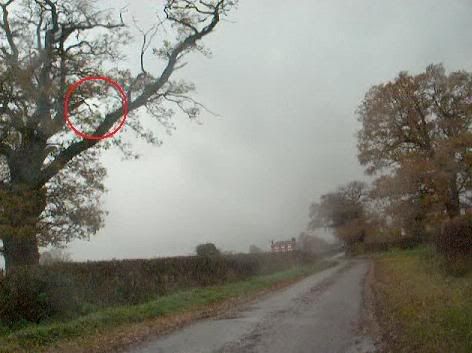
Suddenly, I caught a bit of movement and saw the owl land on a branch higher up the tree. I reached for the binnies, but the bird had disappeared. The camera was still recording, however, so I made a mental note to check the video carefully when I got home. I managed to analyse the film for the first time today and was pleased to see that I had caught the owl on camera. The picture isn't brilliant, but I have ringed the little fellow for your benefit.
Also in this area I saw a couple of Yellowhammers, two Sparrowhawks, a small flock of Chaffinches and a flock of over a dozen Pied Wagtails. Good numbers of Fieldfare were also about and a single Redwing was spotted high in a tree.
On the way back up Weatheroak Hill, I stopped to take a picture of this old windmill, which is up for sale.
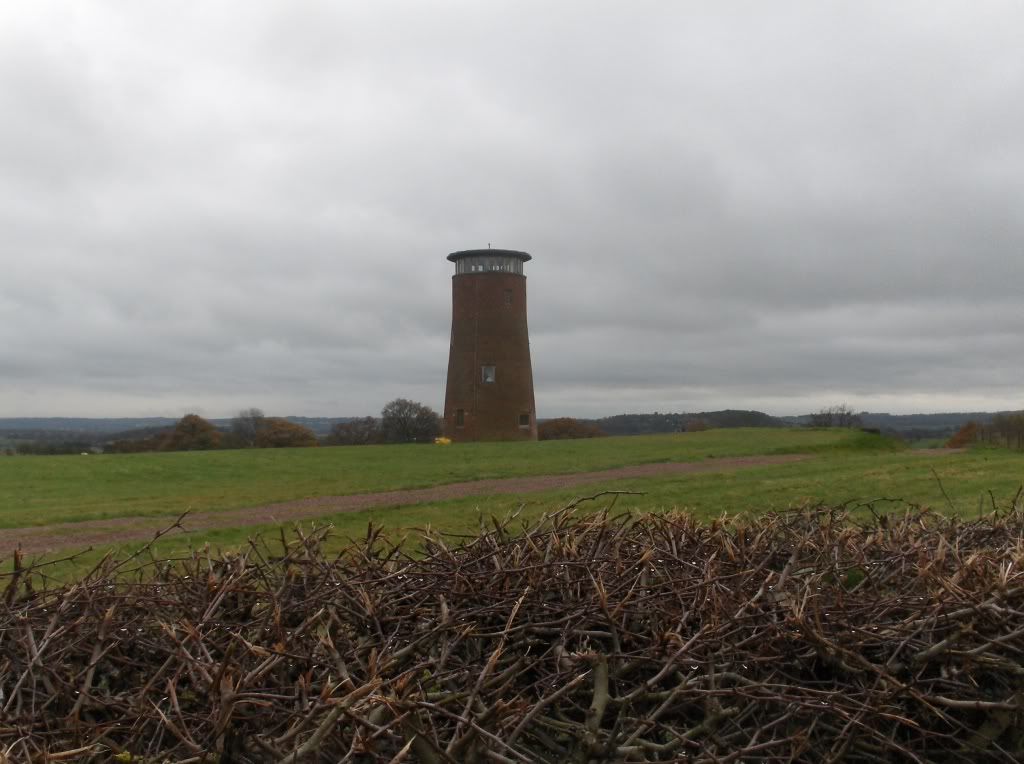
I reckon it would make a cracking bird observatory, though you wouldn't get much change out of £600,000 if you were thinking of buying the place.
I've really enjoyed birding my patch these last few weeks and I think it's time to reveal one of my goals for 2009. I aim to get out and bird the lanes and fields of Wythall at least once a month, occasionally taking in Hopwood, where the Little Owls reside, and Earlswood Lakes, which are about two and a half miles from where I live. All of this birding will be done on foot, and any birds that I see will be added to a specific patch list. I've set myself a target of getting 75 different species on this list. Also, I'll be doing my bit for the environment by using the car less.
I'm also pulling together some other plans, which I will reveal in the New Year, but there is definitely going to be a shift away from getting lifers and year ticks and more emphasis on specific goals, not all of them birding related I hasten to add.
But let's not get ahead of ourselves, there are still six and a bit weeks left before 31 December 2008 and I'm off to Wales on Saturday where I hope to be ticking Purple Sandpipers, Snow Buntings, Water Pipits, Whooper Swans and more. As ever, a trip report will follow upon my return.
Initially, I took a similar route to last week and was pleased to see that the gulls had once again taken up residence in the flooded field along Station Road. A quick scan revealed them all to be Black-Headed Gulls, with no sign of a Mediterranean Gull amongst the throng.
The woodland that connects Tanners Green Lane to Barkers Lane was full of activity last week, but as dead as a doornail this time round. I guess a week is a long time in birding! The fine, but persistent drizzle probably wasn't helping matters as Barkers Lane was also quiet. I did note three Fieldfares, however - a bird that I didn't see last week.
When I reached the magic field along Hill Lane the weather was beginning to improve, so I considered it worth the excursion to Weatheroak Hill and into Watery Lane, which contains the excellent habitat that I mentioned earlier. Just for fun, I had hit the record button on my camera as I made my way towards the tree that is known to contain a pair of Little Owls. Sometimes one of the birds will perch obligingly on one of the prominent lower branches, but I was disappointed to see that it wasn't there.
Suddenly, I caught a bit of movement and saw the owl land on a branch higher up the tree. I reached for the binnies, but the bird had disappeared. The camera was still recording, however, so I made a mental note to check the video carefully when I got home. I managed to analyse the film for the first time today and was pleased to see that I had caught the owl on camera. The picture isn't brilliant, but I have ringed the little fellow for your benefit.
Also in this area I saw a couple of Yellowhammers, two Sparrowhawks, a small flock of Chaffinches and a flock of over a dozen Pied Wagtails. Good numbers of Fieldfare were also about and a single Redwing was spotted high in a tree.
On the way back up Weatheroak Hill, I stopped to take a picture of this old windmill, which is up for sale.
I reckon it would make a cracking bird observatory, though you wouldn't get much change out of £600,000 if you were thinking of buying the place.
I've really enjoyed birding my patch these last few weeks and I think it's time to reveal one of my goals for 2009. I aim to get out and bird the lanes and fields of Wythall at least once a month, occasionally taking in Hopwood, where the Little Owls reside, and Earlswood Lakes, which are about two and a half miles from where I live. All of this birding will be done on foot, and any birds that I see will be added to a specific patch list. I've set myself a target of getting 75 different species on this list. Also, I'll be doing my bit for the environment by using the car less.
I'm also pulling together some other plans, which I will reveal in the New Year, but there is definitely going to be a shift away from getting lifers and year ticks and more emphasis on specific goals, not all of them birding related I hasten to add.
But let's not get ahead of ourselves, there are still six and a bit weeks left before 31 December 2008 and I'm off to Wales on Saturday where I hope to be ticking Purple Sandpipers, Snow Buntings, Water Pipits, Whooper Swans and more. As ever, a trip report will follow upon my return.
Monday, November 10, 2008
Back To Basics
What is your local patch? Is it the reserve that's nearest to you? Maybe it's a local reservoir? I live very close to Earlswood Lakes and Bittell Reservoirs, but as good as they are and as much as I enjoy birding them, I can't describe them as my patch. Upton Warren is only about 20 minutes drive down the motorway and is a truly magnificent place to watch birds, but it too doesn't fit the description.
I started birding properly about five years ago now. I used to go out on a Sunday morning and walk down to the Texaco garage on the A435 to pick up the Sunday Times, making a few detours here and there to see what I could see in the lanes and fields around Wythall.
Looking back, I now realise that this was an excellent way to prepare for more intensive birding later on, as I became really familiar with the calls and songs of our more common species. That's why I think of Wythall as my patch, specifically anywhere that I can get to without having to jump in the car.
If I include garden birds, I reckon I must have seen in excess of 60 species in the last few years. No, I'm probably not going to see any mega rarities whilst I'm out and about, but that doesn't bother me in the slightest. What I like is the familiarity of the place and knowing what's worth looking out for based on past experiences.
This weekend I spent a couple of hours walking my patch. It made a pleasant change from the recent glut of twitching that has been going on, and it was a chance to begin focusing on my goals for 2009. More of that in a later post, but until then here are a few pictures and notes from my walk.
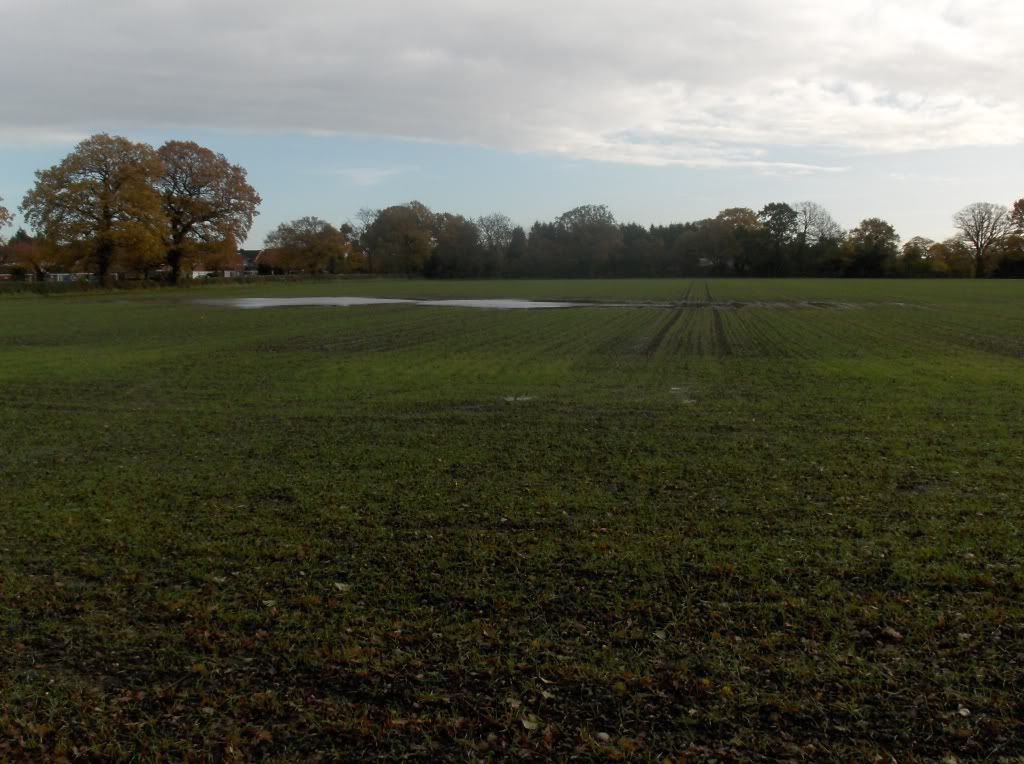
I don't normally go this way, but the flooded field along Station Road has held a few gulls lately, so I considered it worth a look. Turns out there was nothing there, but I had already added Woodpigeon and Blackbird to my list, and Jay and Magpie soon followed in the fields behind me. The woods that lead onto Tanners Green Lane yielded nothing.
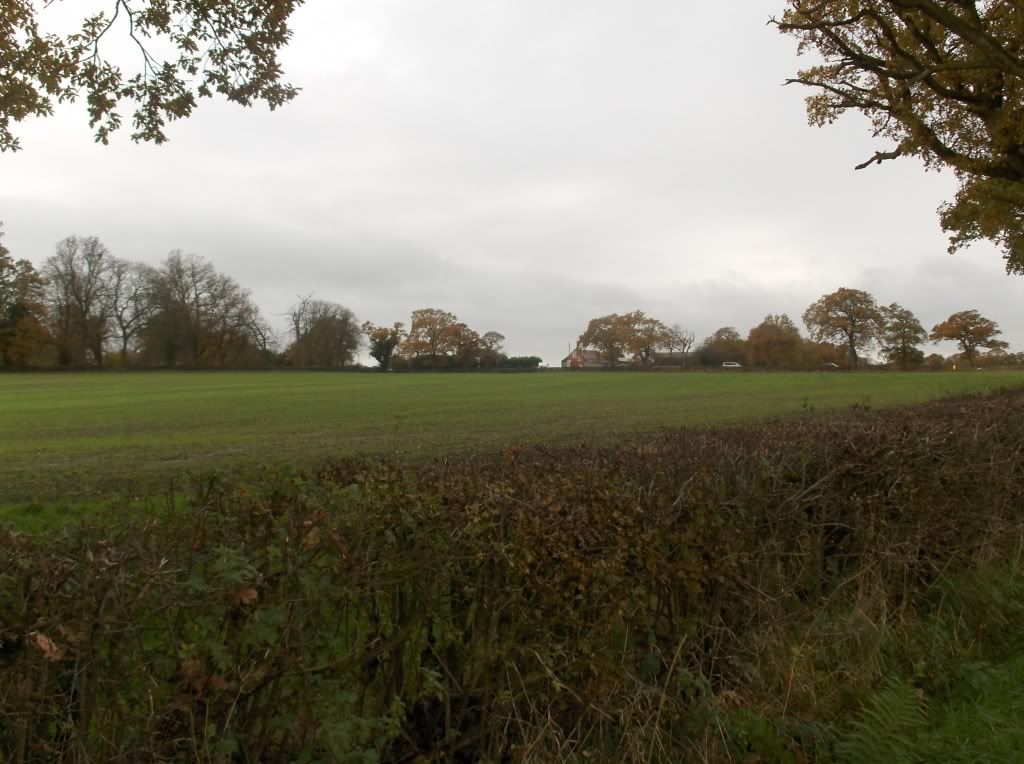
In view of my diversion, I joined Tanners Green Lane further down than normal. A lone gull was spotted in the adjoining field. A short walk back towards the A435 revealed it as a Black-Headed Gull.
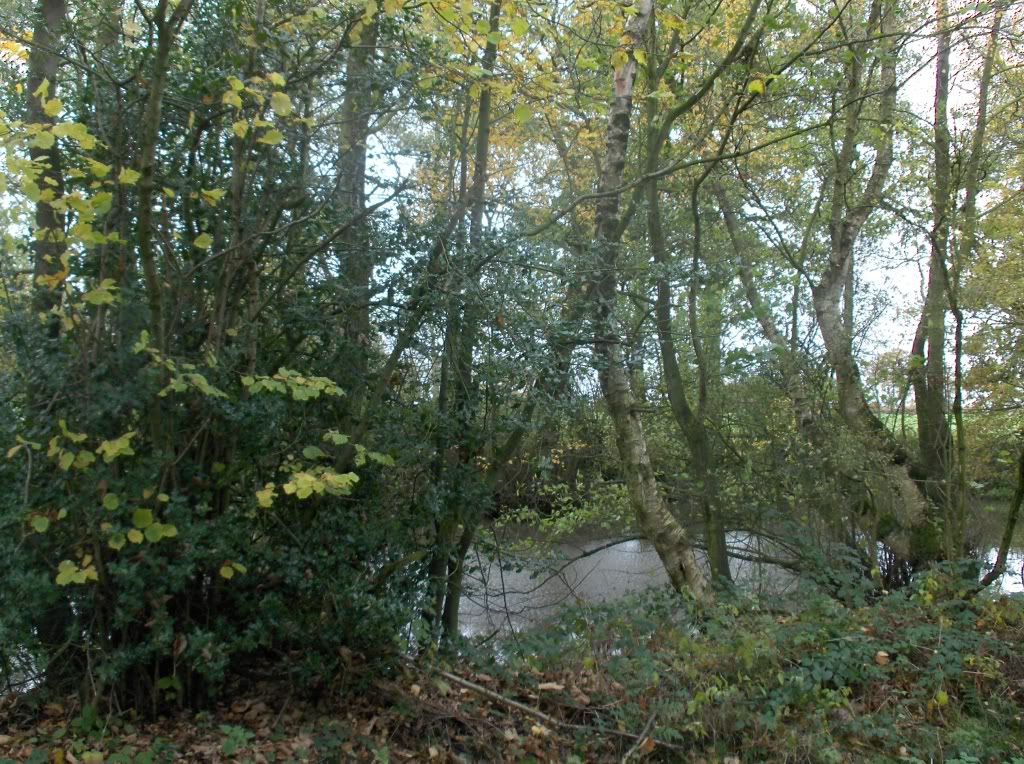
Always worth a look in this pond. I had one of my first ever Great Spotted Woodpeckers here and the odd Mallard and Moorhen have been seen in the past. Nothing today, however.
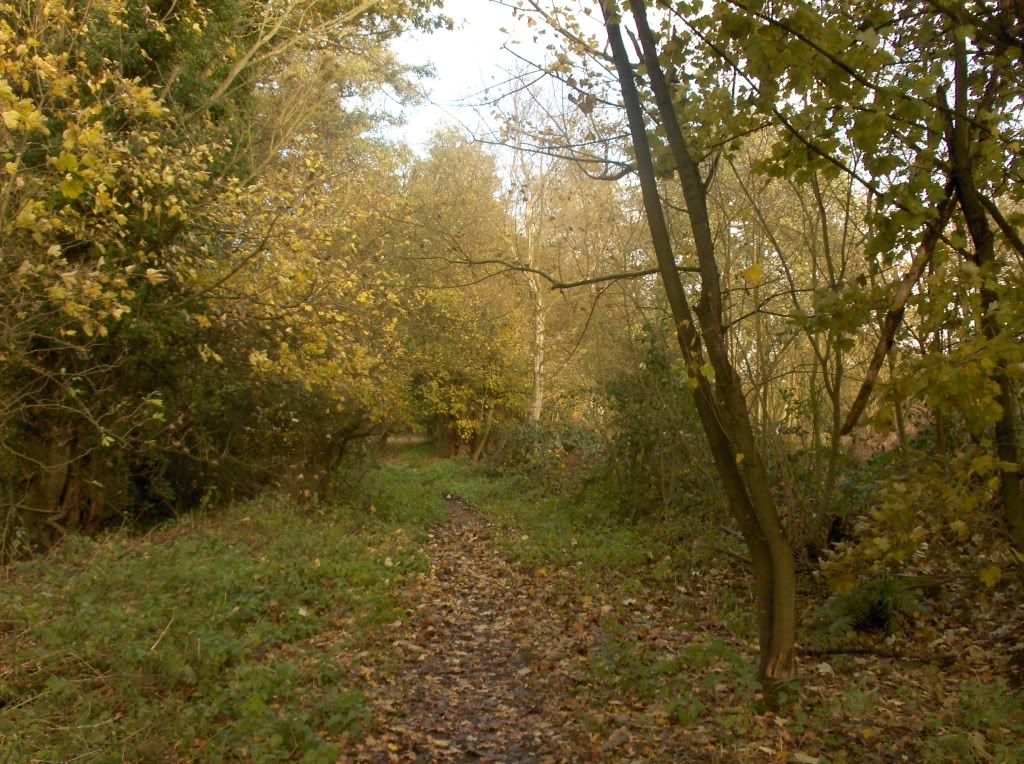
These woods link Tanners Green Lane to Barkers Lane. They were particularly fruitful today, yielding Blue Tit, Goldcrest, Great Tit, Goldfinch, Treecreeper and Long-Tailed Tit. A Great Spotted Woodpecker and a Dunnock turned up further down the path. A Common Buzzard was heard, but not seen.
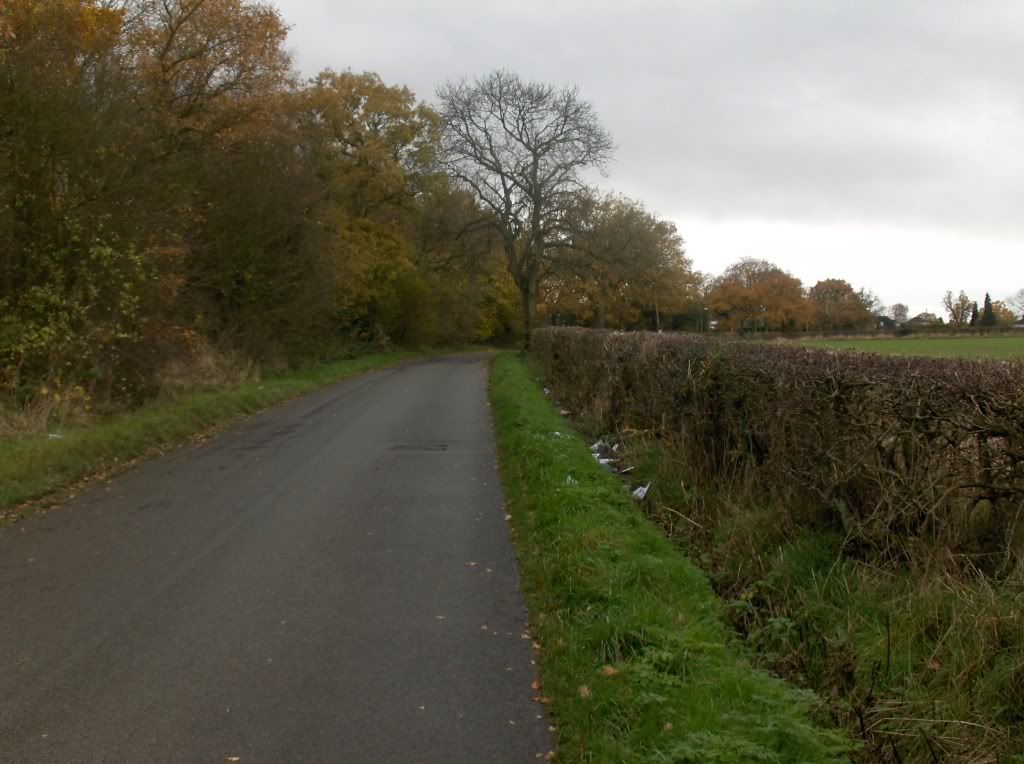
This lane borders more good woodland. Something caught my eye from with a holly bush laden with berries. After a short wait, a Redwing eventually gave good views. I'd been hoping for that one. A Sparrowhawk drifted over the adjacent fields shortly afterwards and a Mistle Thrush and a pair of Carrion Crow were spotted in the fields further along. A Lesser Black-Backed Gull also flew overhead.
The hedgerows along the A435 often hold Bullfinch in winter, but there were none today. A few years ago I think I had a Waxwing along here too, but I was an inexperienced birder at the time and never certain enough to tick it. I'll be looking a bit more closely this winter!
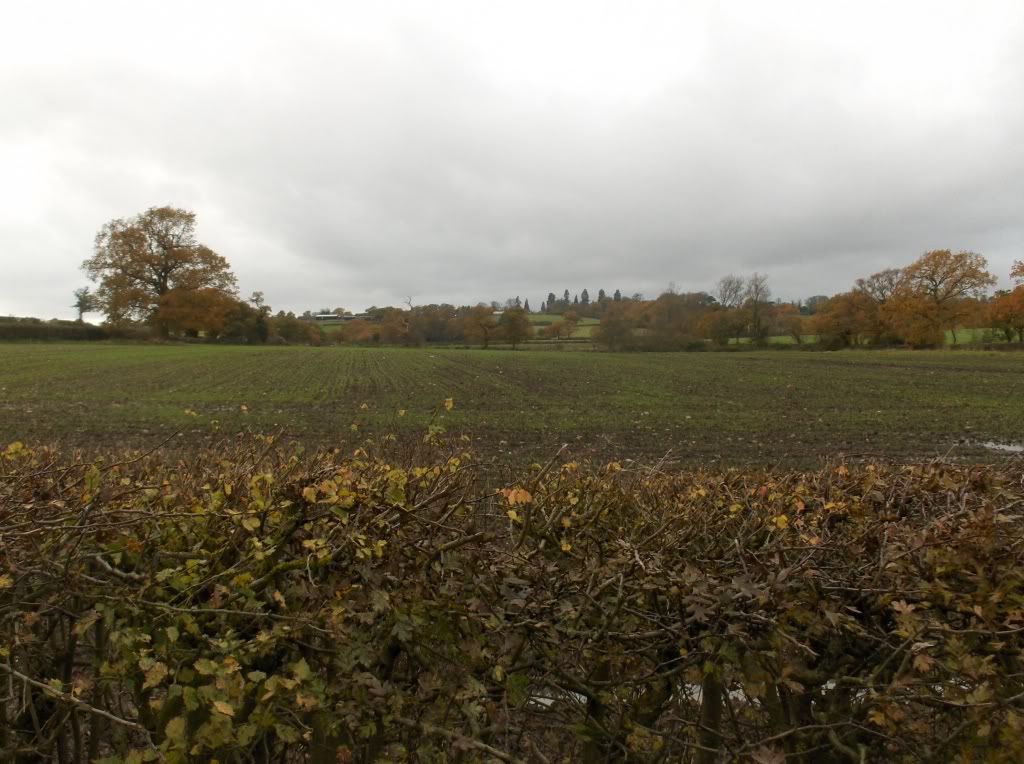
There's a field in Wales that I call the magic field. Well, guess what? I have one in Wythall too. It holds Lapwing in the breeding season and sometimes Skylark and Yellowhammer. Today it failed to live up to its reputation and produced a single Chaffinch.
Chapel Lane is normally abundant with House Sparrows, but I didn't see a single one today. I wonder where they all went to? A dozen Black-Headed Gulls were seen in the fields near Beckett's Farm.
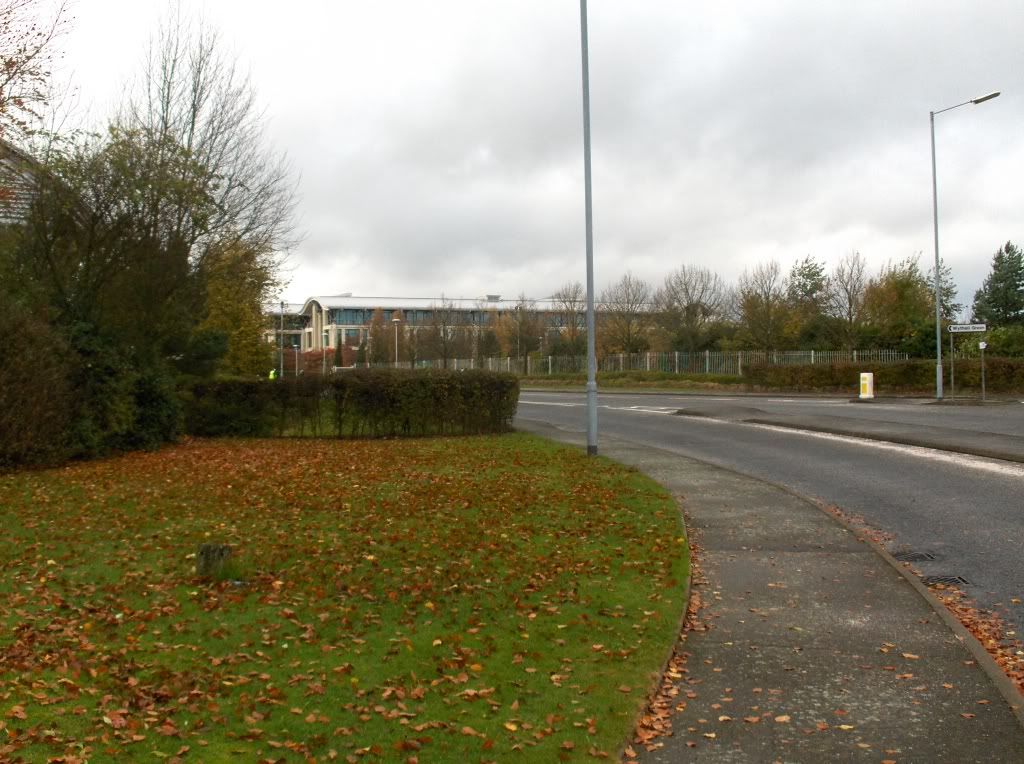
This is where I work. In the grounds I could probably have added Nuthatch to the list. It does throw up some good stuff from time to time, most notably a Red Kite earlier this year.
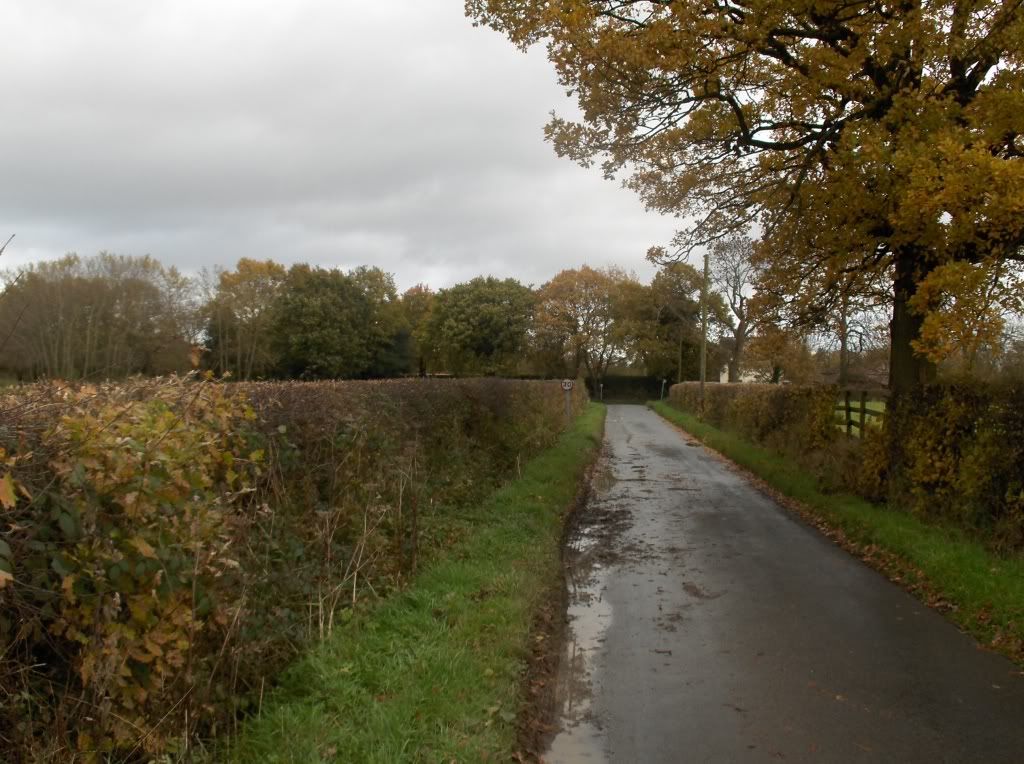
A Pied Wagtail was seen in Wilmore Lane, then more Redwing and some Bullfinches in Brick Kiln Lane. The woods further down were unusually quiet. At the right time of year, these can hold Chiffchaff and Siskin. I think this is where the local Muntjacs reside too.
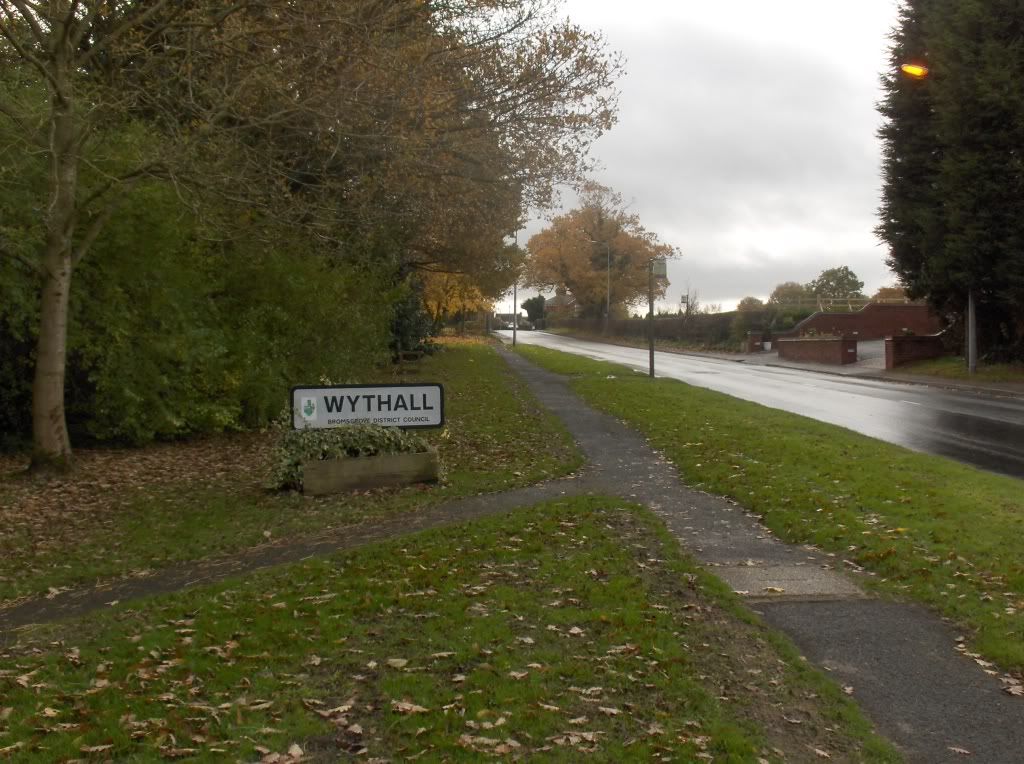
Out of Brick Kiln Lane and back onto the Alcester Road. Home is just a few hundred yards further on. A really enjoyable morning's birding and I've walked just over three miles, which is about the only exercise I get.
I really must do this more often ...
I started birding properly about five years ago now. I used to go out on a Sunday morning and walk down to the Texaco garage on the A435 to pick up the Sunday Times, making a few detours here and there to see what I could see in the lanes and fields around Wythall.
Looking back, I now realise that this was an excellent way to prepare for more intensive birding later on, as I became really familiar with the calls and songs of our more common species. That's why I think of Wythall as my patch, specifically anywhere that I can get to without having to jump in the car.
If I include garden birds, I reckon I must have seen in excess of 60 species in the last few years. No, I'm probably not going to see any mega rarities whilst I'm out and about, but that doesn't bother me in the slightest. What I like is the familiarity of the place and knowing what's worth looking out for based on past experiences.
This weekend I spent a couple of hours walking my patch. It made a pleasant change from the recent glut of twitching that has been going on, and it was a chance to begin focusing on my goals for 2009. More of that in a later post, but until then here are a few pictures and notes from my walk.
I don't normally go this way, but the flooded field along Station Road has held a few gulls lately, so I considered it worth a look. Turns out there was nothing there, but I had already added Woodpigeon and Blackbird to my list, and Jay and Magpie soon followed in the fields behind me. The woods that lead onto Tanners Green Lane yielded nothing.
In view of my diversion, I joined Tanners Green Lane further down than normal. A lone gull was spotted in the adjoining field. A short walk back towards the A435 revealed it as a Black-Headed Gull.
Always worth a look in this pond. I had one of my first ever Great Spotted Woodpeckers here and the odd Mallard and Moorhen have been seen in the past. Nothing today, however.
These woods link Tanners Green Lane to Barkers Lane. They were particularly fruitful today, yielding Blue Tit, Goldcrest, Great Tit, Goldfinch, Treecreeper and Long-Tailed Tit. A Great Spotted Woodpecker and a Dunnock turned up further down the path. A Common Buzzard was heard, but not seen.
This lane borders more good woodland. Something caught my eye from with a holly bush laden with berries. After a short wait, a Redwing eventually gave good views. I'd been hoping for that one. A Sparrowhawk drifted over the adjacent fields shortly afterwards and a Mistle Thrush and a pair of Carrion Crow were spotted in the fields further along. A Lesser Black-Backed Gull also flew overhead.
The hedgerows along the A435 often hold Bullfinch in winter, but there were none today. A few years ago I think I had a Waxwing along here too, but I was an inexperienced birder at the time and never certain enough to tick it. I'll be looking a bit more closely this winter!
There's a field in Wales that I call the magic field. Well, guess what? I have one in Wythall too. It holds Lapwing in the breeding season and sometimes Skylark and Yellowhammer. Today it failed to live up to its reputation and produced a single Chaffinch.
Chapel Lane is normally abundant with House Sparrows, but I didn't see a single one today. I wonder where they all went to? A dozen Black-Headed Gulls were seen in the fields near Beckett's Farm.
This is where I work. In the grounds I could probably have added Nuthatch to the list. It does throw up some good stuff from time to time, most notably a Red Kite earlier this year.
A Pied Wagtail was seen in Wilmore Lane, then more Redwing and some Bullfinches in Brick Kiln Lane. The woods further down were unusually quiet. At the right time of year, these can hold Chiffchaff and Siskin. I think this is where the local Muntjacs reside too.
Out of Brick Kiln Lane and back onto the Alcester Road. Home is just a few hundred yards further on. A really enjoyable morning's birding and I've walked just over three miles, which is about the only exercise I get.
I really must do this more often ...
Subscribe to:
Posts (Atom)